
After graduating with my Bachelor’s degree from Arizona State University in 2023, I decided to pack up and move to Paris to live as an au pair with a host family in order to improve my French and immerse myself in the French culture.
After my year as an au pair, I felt like I wasn’t ready to move back to the United States! I explored my options of how I could stay in France, so I applied to an endless amount of jobs, but soon realized it’s insanely hard to get a job in France without a master’s degree.
Talking with my other au pair friends, one mentioned to me how she was applying to schools for the alternance program, which I had never heard of before. As she started to explain to me the program and how it worked, I realized that this was the best opportunity for me to stay in France.
In this blog, I’m going to take you through my experience pursuing my Masters (or a Bac +5) in Digital Transformation, Marketing and Strategy at Emlyon Business School on their alternance track, and help show you how you can pursue your masters in France as well!
Be sure save this blog on Pinterest for later, and subscribe to my blog to stay up to date on all of the travel deals, new foodie blogs and city guides, and tips for moving and living abroad!
At a glance:
- What is the Alternance Program in France?
- Applying to Masters Programs in France
- How to Find an Alternance
- My experience
- What happens after?
- Visa questions
- Can foreigners receive chomage?
- Final thoughts
- Questions?
What is the Alternance Program in France?
Pursuing a degree on the alternance track in France is a very common path for those looking to further their education, whether it be early in their academic career for their BAC +3 (between an associates and bachelors degree from an American perspective), or later on for their masters for their BAC +4 (1st masters) or BAC +5 (2nd masters).
When studying on the alternance track, you split your time between getting hands-on experience working in a company with taking classes at the Fac (faculté) or University.
For example, my rhythm was 3 weeks at my alternance followed by 1 week of school, so I was only in school about 1 week a month. Other rhythms can be 2 weeks at the alternance and 1 week at school, or even splitting up the week with 3 days at the alternance and 2 days at school.
Not only is this option attractive because you gain real world experience, but there are a lot of other benefits as well!
When you are an alternant, you are considered a full time employee at your company (even though you split the time between being there and at school), and thus you are paid and receive benefits such as health care (the mutuelle, on top of the carte vitale which you will have to begin with as an international student) and congés payés (paid vacation).
The pay you receive as an alternant depends on many factors such as your age, work experience, level of studies, and what type of company it is. It usually is a percentage of the SMIC, or minimum wage, and isn’t the full amount. However, it’s enough to get by.
Additionally, the company you work with pays for the cost of your education, so your studies are completely free!
The alternance program is also designed to provide high advantages post-graduation in terms of finding a job and salary. Gaining real world experience while pursuing your degree will be great for your resume and make you even more marketable post graduation.
One thing to note is that in France, they really value to prestige of the university where you study. This will ultimately open more doors career wise, and give you the opportunity to negotiate your salary.
For me, the fact that I would have a salary and was able to pursue my masters for free, these two things were the determining factors in realizing this was an amazing opportunity, not only to stay in France, but also to further my education.
Recap of the benefits of taking the parcours alternant :
- Degree is payed for by your company where you intern
- Salary from working with your company
- Health care benefits
- Vacation time (congés payés)
- Hands on experience
- Networking
Applying to Masters Programs in France
Applying to Masters programs in France can differ depending on which type of program it is, whether it be on the alternance track, in the Grande École program, or in a regular full-time degree. Since I only have experience in applying to the alternance programs, I will only be discussing that here.
For me, I had found out about the Masters on the alternance track quite late into the season of applications. And when I say quite late, I mean about 2-3 weeks before the deadline. Hopefully you are doing your research a bit before I started so you can take your time filling out the application!
Application requirements:
- CV (résumé)
- Cover letter
- Copy of passport + valid visa
- Copy of last diploma received, potentially translated into French
- High school transcript, potentially translated into French
- French language certificate – normally at least B2
Optional:
- GMAT / GRE
For me, none of the schools that I applied to required the GMAT or GRE. Looking back specifically at Emlyon Business School where I studied, they say that having this is optional and may help your chances, but I did not submit a score for either.
It seems to me that if the program is 100% in English or is a full time program and not on the alternance track, they may require the GMAT or GRE.
Cover letter and CV
For both my cover letter and CV, I made two versions. One in English and one in French! Then I adapted them both to the programs I was applying to.
If possible, I definitely recommend having a French friend look over your cover letter and CV in French because the way we word our professional experiences in English is very different that how the French do it!
My host parents were kind enough to read mine over, and I learned that you can not “cultivate” your experience in French, however I would have used the word cultivate in English.
French Language Test
When applying to a Masters program that is completely in French, they require typically a minimum level of B2, with a certificate that is dated within the last 2 years.
For me, I had already been preparing to take the DALF C1 exam in May of 2024 before I knew I wanted to apply to Masters school in France. In order to prepare, I was taking a C1 grammar course through Paris Cité Université as well as a DALF C1 prep course through La Sorbonne.
However, since the application deadlines for these programs were in March, I didn’t have time to take the DALF C1 and submit my score.
Luckily, another one of my international friends told me about how she was taking the TCF-Tout Public exam to apply for her Masters program. This exam is quite different than the DALF C1, so I will go into those details below.
The DELF B2 and DALF C1 certificates are extremely beneficial because they are recognized worldwide by higher level universities and institutions, and the qualification lasts your whole life. This exam is also more intense than the TCF-Tout Public because it includes 4 sections : production orale, production écrite, comphréhension orale, and comphréhension écrite.
The TCF-Tout Public exam, on the other hand, is a much shorter and less intense set up where you do not need to prepare for it ahead of time, and can also sign up on a rolling basis. This exam is composed of the compréhension orale, maîtrise de grammar, and compréhension écrite, with two optional sections of the expression orale and expression écrite.
Additionally, the TCF certification only lasts two years, as opposed to the DELF and DALF that never expire. This exam is also recognized by higher lever universities and institutions, entreprises, and even the Québec Ministry for Immigration, Francisation and Integration.
Depending on your timeline, one exam might be more beneficial for you than the other!
How to Find an Alternance
Once you are accepted into your program, finding an alternance is the last step to solidify your spot with your school and campus. You can 100% begin applying to alternances before you are accepted into a masters program, and I even recommend you to! This process takes a very long time.
To search for an alternance, I used LinkedIn, my school’s connection through Job Teaser, as well as HelloWork and Welcome to the Jungle.
Ultimately, I found my alternance through connections, but I had a few other opportunities develop through these platforms. When applying, it does feel like an endless search, but it normally takes a lot of applications before you start to hear responses and move to the next round, typically.
My experience
My experience at Emlyon Business School in their Mastère Spécialisé Transformation Digitale, Marketing et Stratégie was a demanding yet formidable path. I believe I learned a lot, and probably even more through my alternance and the hands-on experience.
It’s important to note that university and masters programs in France are quite different compared to those in the United States, especially on the alternance track.
For starters, since my alternance rhythm was 3 weeks at my alternance followed by 1 week of school, I only actually had classes about one week each month. During this week, I would have one subject for about 3-4 days, and then never have the class again for the rest of the year, except for our final exam in July addressing topics from the classes all throughout the year.
Because we only had each subject for about 3-4 days, classes were long and intense, and the hours changed from week to week. Sometimes we’d start at 8am and other weeks we’d finish at 8pm, but starting later in the day. At the end of each week, we presented a new digital strategy for the given company, incorporating the new techniques we had learned over the past 3-4 days.
This portion really allowed me to become more comfortable presenting in French, and develop my professional vocabulary in the language.
Aside from the demanding schedule, I think that being an international student in a fully French program is quite difficult because it can feel discouraging not being a native French speaker. However, I feel that with time, I gained a lot of confidence speaking in professional settings and in public speaking.
Before, I had really only used my French with friends, in public, and working as an au pair! So the vocabulary took some time to get used to.
Despite these challenges, I do believe pursuing a Masters on the alternance track is a great option for those looking to stay in France and further their education! It is a great way not only to dive further into your niche of study, but also gain real world experience throughout your alternance.
This opportunity will open many doors for the future afterwards, and make it easier to stay in France longterm.


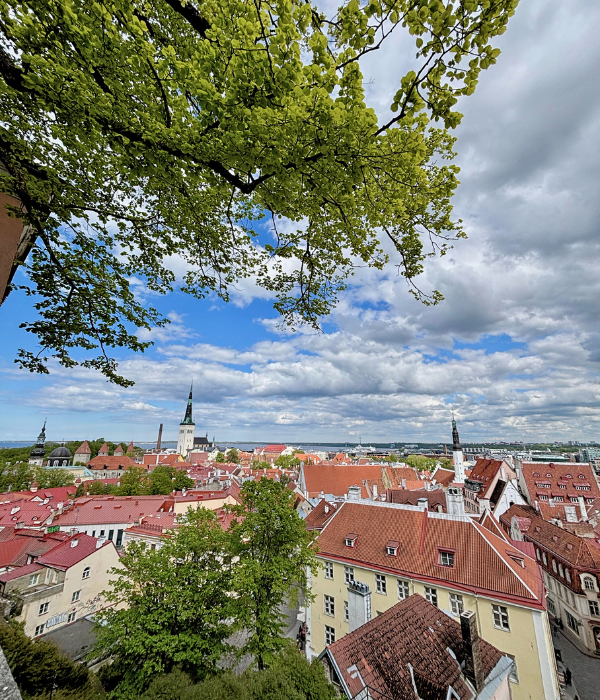
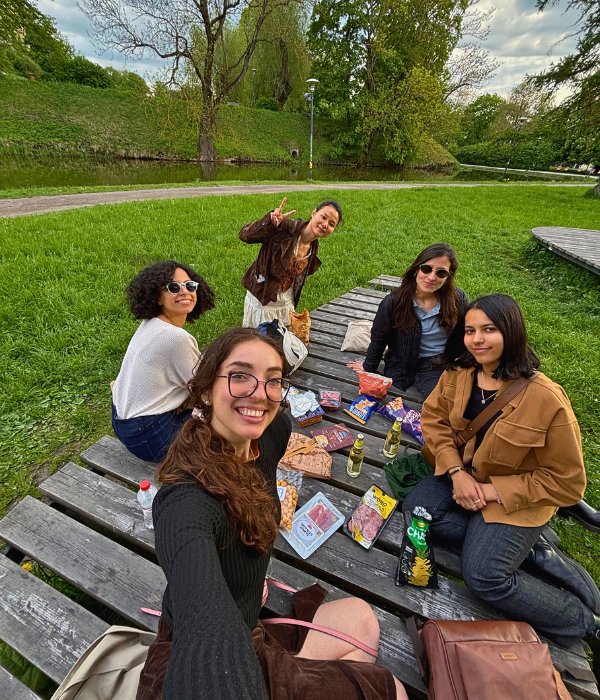
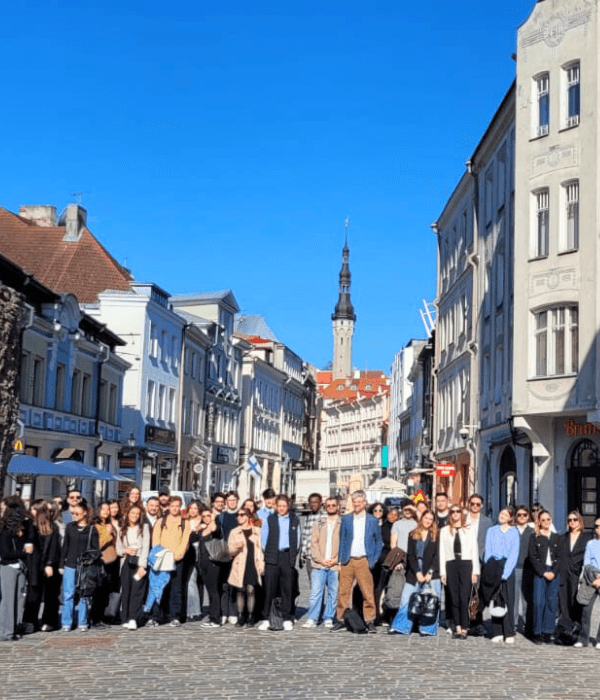
International Seminar in Estonia
One of my favorite parts of my Masters program was our International Seminar in Estonia! This was a surprise for me, because I didn’t know our program had an international trip included.
We spent one week in Tallinn, Estonia, and did a day trip to Helsinki, Finland in order to learn more about the digital advancements and business practices of Estonia.
Personally, I really enjoyed this trip and the opportunity to learn about how advanced Estonia is! The food and cultural events were amazing, and it provided a chance to get to know my classmates even better.
To top it off, my group and I placed #1 in the competition against the rest of our class, which was the cherry on top!


What happens after?
At the end of your alternance, you will be faced with many questions and decisions, especially as a foreigner.
Some questions you might ponder near graduation :
- Do I want to stay in France?
- Do I want to stay with my company?
- How do I find a new job?
- Can I receive chomage as a foreigner if I finish my alternance and don’t have a contract?
If you want to stay in France, you will want to be prepared to extend your visa because the diploma will not be delivered right when you finish the program in order to change your visa status. For me, my diploma came 3 months after the program ends. I will go more into depth about the visa situations below.
If you are looking to stay in France, you also need to decide if you want to stay with your company, or find a new experience. Not all companies will be looking to hire their alternants, many prefer to have a new alternant come the next year as it is more financially advantageous for them.
In the spring time, I recommend organizing a point with your managers to talk about your growth thus far since your beginning, and to see if there are any opportunities to continue growing with the company after your alternance contract is up.
If your company is not hiring, or you choose to look for another experience, the job search will be on the horizon for you. Just like finding an alternance, I would suggest using LinkedIn, Job Teaser, HelloWork, Welcome to the Jungle, and all of the connections you’ve made throughout the year in order to put yourself out there and land a new job.
It’s important to note that the job search can take a few months as the hiring processes are quite long here in France. Yet, as a foreigner and having graduated from a masters program in France, you’ll be able to proceed with the job search on the RECE visa. I will talk about in more detail below!
For me, my company proposed me a CDI so I decided to stay with them! I feel very lucky and grateful because I did not expect them to have an opening by the time my contract was up, and not all companies are looking to hire full-time post alternance.
All in all, every post-graduation path looks a little different, and it’s completely normal not to have everything lined up right away. Whether you stay with your alternance company, look for a new opportunity, or take time to navigate visas and job applications, the most important thing is to start these conversations early and stay informed about your options.
Visa questions
Switching from an Au Pair Visa to Student Visa
Aside from landing an alternance, the visa remains the biggest issue. Coming into the program, as a foreigner we can stay on a student visa which would last the length of the program.
If you are coming from your home country, all you will need to do is apply through your consulate around 3 months before the start of your program.
If you are already in France as an au pair like I was, all you need to do is switch your status from titre de séjour jeune fille au pair to titre de séjour étudiant on the ANEF website.
It’s important to know that actually, with an au pair visa in France, you can only switch to a student visa afterwards. One of my best friends found out the hard way when she had applied to the visa salarié to work in a primary school as an English teacher. She had her récépissé, so all was technically going well until she got a call from the prefecture saying that her visa got refused due to the visa she was initially on and that she had to go home.
It is recommended to switch your visa status between 4 and 2 months before its’ expiration. If you apply any later than this, you risk the chance to pay a late fee!
Visa Options after Masters School
If you are staying in France after the Masters program, you will have 3 visa options, to my knowledge :
- Visa salarié (working visa)
- Passeport talent (talent visa)
- Visa RECE (job search / creation of company).
1. Visa salarié
The visa salarié is a working visa that is valid for 1 year, renewable, and tied to the company that you are working with.
You are eligible for this visa if you have a CDD contract of more than 3 months with a company, or a CDI contract. The CDI contract is a safer contract to be in as it has an indefinite duration, and it provides more job security.
To apply for this visa, your company will have had to publish the job on France Travail for 3 weeks consecutively, and then apply for the autorisation de travail (work authorization) through the prefecture.
With the autorisation de travail, you will then be able to apply for the working visa.
The ensemble of the requirements needed for this visa are:
- work authorization (autorisation de travail)
- CDD or CDI contract
- a copy of your passport and current visa
- a justificatif of where you live (electricity or insurance bill)
- justification of your entry in France
To apply for this visa, visit the website of the préfecture de police of your city. For example, this is the link if you live in Paris.
2. Passeport talent
Arguably, the most attractive visa for us foreigners is the passeport talent. This visa is valid for 4 years and renewable, does not require an autorisation de travail, yet it does have stricter requirements.
Passeport talent requirements :
- Having received a Mastère Spécialisé, Master, or diploma of niveau 1 from a Grande Ecole within France.
- minimum salary of 39 582 €
This ensures to the French government that you are talented in the work force and are worth investing in.
To verify all of the requirements, especially as the salary required does change quite often, visit this website by the French government.
To apply for this visa, you can apply directly through the ANEF website.
3. Visa RECE
The visa RECE, or recherche d’emploi ou création d’entreprise, allows you to stay in France for one year following the degree of a Masters or Mastère Spécialisé. With this visa, you are authorized to work in either a CDD contract or CDI, and you can also receive chomage if you have not yet found a job.
To apply for this visa, it is not through the ANEF website like the passeport talent or like switching from the au pair to student visa. You will have to file the request through your prefecture, such as the Prefecture de Police de Paris, just like for the visa salarié.
The documents required for this visa are :
- une attestation de réussite or diploma of your Masters program or Mastère Spécialisé, proving you successfully passed your classes
- a copy of your passport and current visa
- a justificatif of where you live (electricity or insurance bill)
- a justificatif of the assurance maladie (ameli.fr)
Can foreigners receive chomage?
Chomage is France’s form of unemployment benefits, and amount of chomage you receive will be a percentage based on your salary as an alternant.
If you have just finished you alternance contract and you are not staying with your company, you can apply for chomage though France Travail.
You are able to receive chomage as a foreigner, but it seems as it is not the same across the board for everyone and they take it case by case. I had friends from certain countries who were able to receive it while still on a student visa, and others had to wait until they switched to the RECE visa.
But, overall it is comforting knowing that we are able to receive chomage!
Final thoughts
My year pursuing my Masters in France was quite the journey. It definitely wasn’t an easy path, but I think that’s what makes the experience that much more rewarding at the end! I was able to grow and overcome many challenges, meet so many new people, travel to two new countries, and gain real business experience with a French company.
My goal when I moved to France as an au pair was to be able to improve my level of French enough to potentially be able to study in French, and I honestly didn’t know if it would be possible! Looking back, being able to follow my initial dream is honestly hard for me to believe that it’s even real.
Since finishing my Masters, I am continuing with my company where I was an alternant on a CDI contract! I am excited to be able to grow professionally with them, and continue living in France!
Questions?
If you have any questions about moving abroad, becoming an au pair, pursuing a degree in France, or anything else related, feel free to leave a comment on this post!
Also, feel free to comment about your experience if you have also followed a similar path moving abroad in France or another country. I would love to hear how your journey was!
Thank you for reading about how to pursue your Masters in France as an international student!
Be sure to subscribe to stay up to date with all things living abroad, travel itineraries, foodie inspo, solo travel, travel deals, and so much more.
Xx,
Carmela
 Under The Sun
Leave a comment